In my previous post, I talked about what NPK is, the three main foods every plant needs: Nitrogen (N), Phosphorus (P) and Potassium (K).
But soon a new question came up: when should I give which one?
Think about how we feed a child. A baby needs milk. A growing child needs more food to build a strong body. A teenager needs even more energy. The same person needs different food at different stages of life.
Plants are exactly the same. A tiny seedling, a fast-growing plant, and a plant full of flowers and fruits all need different things.
Over time, I’ve learned that giving the right NPK, consistently, at each growth stage leads to much better harvests. That’s why I started following a simple 5-stage NPK feeding timeline. Let me walk you through it.
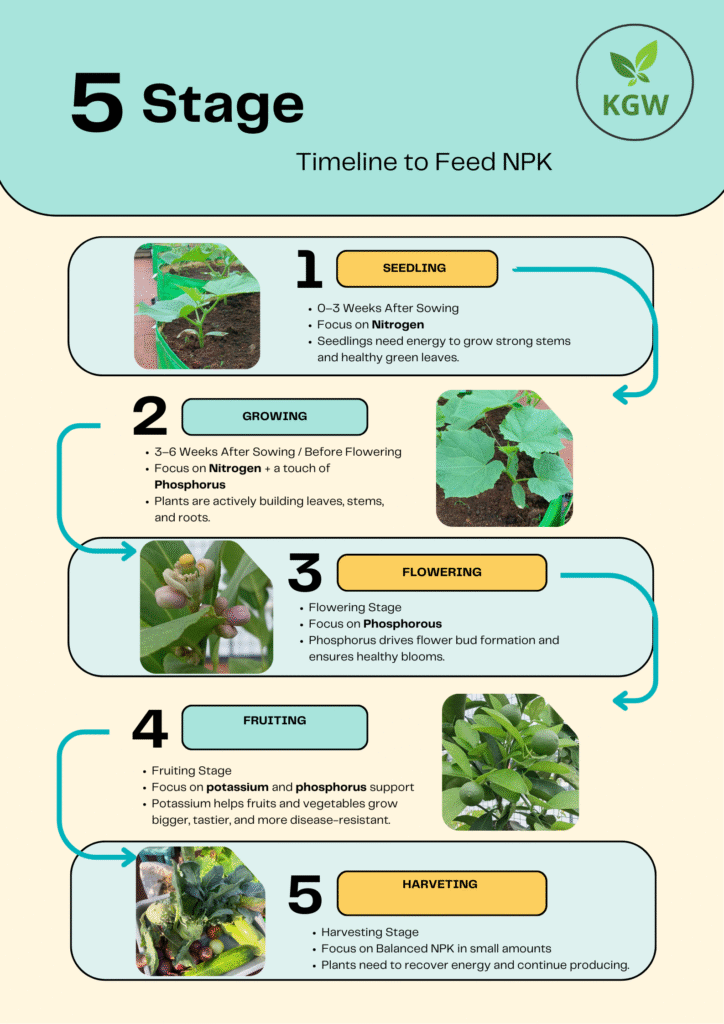
The 5 Stages at a Glance
- Seedling: a little Nitrogen
- Growing: Nitrogen, with a touch of Phosphorus
- Flowering: Phosphorus
- Fruiting: Potassium, with support from Phosphorus
- Harvesting: small, balanced NPK
Here’s an easy way to remember it: N for leaves, P for roots and flowers, K for fruits.
Stage by Stage: What to Feed and When
Stage 1: Seedling (0–3 weeks after sowing) 🌱
What to focus on: Nitrogen (N), in very small amounts.
Why: Seedlings need energy to grow strong stems and healthy green leaves. But their roots are still baby roots, soft and delicate.
How to feed:
- Use light organic feeds like compost tea, diluted cow dung slurry, or vermicompost extract.
- Go easy! Too much fertilizer can burn young roots.
- Indoor plants: Wait until 2–3 true leaves appear, then start with very mild doses.
Stage 2: Growing (3–6 weeks, before flowering) 🌿
What to focus on: Nitrogen, with a touch of Phosphorus.
Why: This is when the plant is busy building leaves, stems and roots, like a child going through a growth spurt!
How to feed:
- Add organic manure, compost, or vermicompost to the soil.
- Leafy vegetables like spinach, coriander and lettuce: keep giving more nitrogen, because the leaves are your harvest!
- Indoor foliage plants: Feed a diluted, nitrogen-rich compost every 3–4 weeks.
Stage 3: Flowering 🌸
What to focus on: Phosphorus (P).
Why: Phosphorus helps the plant form flower buds and gives you healthy blooms. No flowers means no fruits, so this stage is important!
How to feed:
- Add bone meal or rock phosphate to the soil.
- Feed about every 15 days during the flowering season.
- Tomatoes, brinjals, marigolds and hibiscus all love phosphorus at this stage.
Stage 4: Fruiting 🍅
What to focus on: Potassium (K), with support from Phosphorus.
Why: Potassium helps fruits and vegetables grow bigger and tastier, and it makes the plant stronger against diseases.
How to feed:
- Use banana peel (as compost, powder or a soaked “banana peel water”), a little wood ash, or a potassium-rich organic fertilizer.
- Feed every 2–3 weeks until harvest.
- Indoor flowering plants: A small liquid potassium feed helps the blooms last longer.
Stage 5: Harvesting 🧺
What to focus on: Balanced NPK, in small amounts.
Why: After giving you so much, the plant needs to recover its energy and keep producing, especially long-yielding crops like tomatoes, chillies and beans.
How to feed:
- Give a light dose of compost or diluted organic manure once a month.
- Leafy vegetables: Keep a light nitrogen supply going, so new leaves keep growing back after each harvest.
Where Do I Get N, P and K Naturally?
You don’t need chemical fertilizers. Many of the best plant foods come from your kitchen or a local nursery:
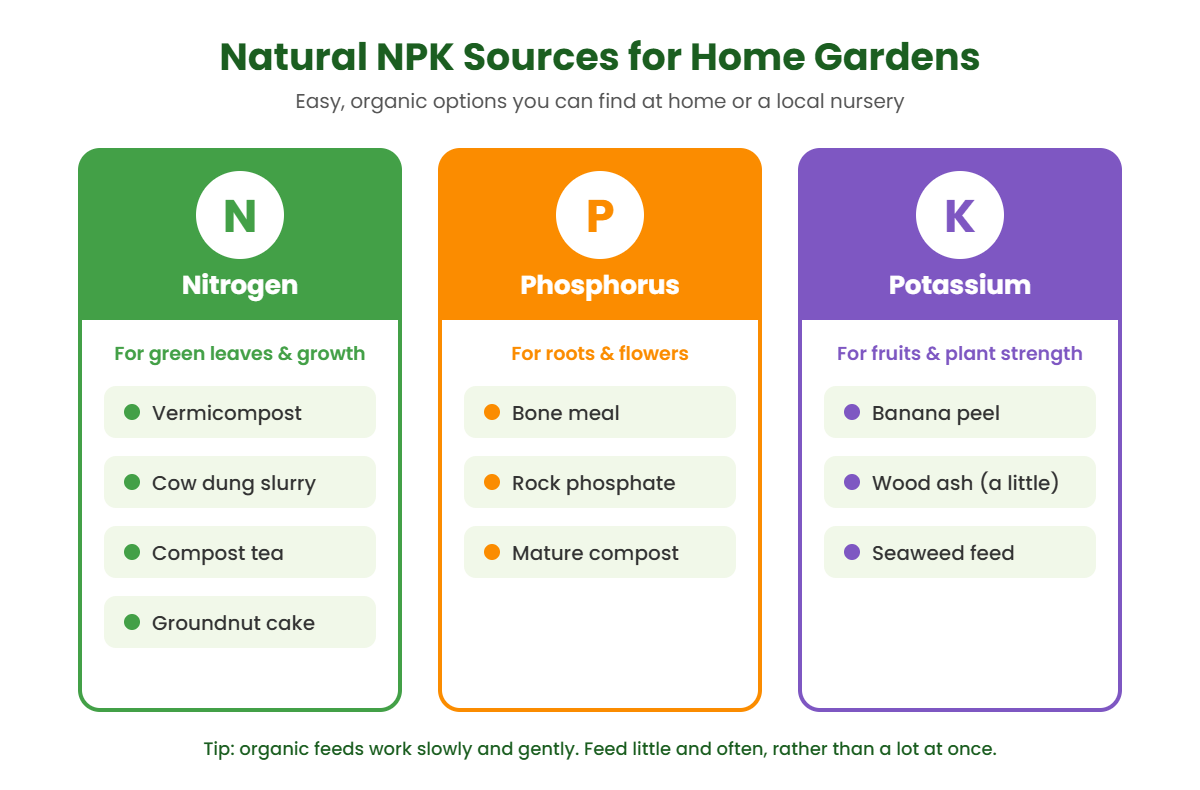
One small tip on wood ash: use only a pinch or two. Too much can make the soil too alkaline.
A Special Note for Indoor Plants 🪴
- Foliage plants (money plant, snake plant, areca palm): Monthly feeding with mild nitrogen keeps the leaves lush and green.
- Flowering indoor plants (anthurium, peace lily, orchids): Increase phosphorus and potassium slightly when they’re about to bloom.
- Golden rule: Indoors, always dilute feeds to half-strength. Indoor plants grow slowly and their roots burn easily.
Quick Questions
How often should I feed my terrace plants?
Roughly every 2–3 weeks during active growth, flowering and fruiting, and about once a month during harvest or slow growth. Always feed less for seedlings and indoor plants.
Can I give N, P and K all at the same time?
Yes. Good compost and vermicompost already contain a little of all three. The timeline simply tells you which one to boost at each stage.
What happens if I give too much fertilizer?
Too much can burn the roots and cause leaf edges to turn brown. If that happens, water the pot well to wash out the extra, and wait a few weeks before feeding again.
Feed the Soil, and the Soil Feeds Your Plants
The journey from seedling to harvest isn’t just about water and sunlight. It’s also about giving your plants the right food at the right time.
Remember the simple rule: Nitrogen for green growth, Phosphorus for roots and flowers, Potassium for fruits. Follow the five stages, feed a little and often, and your plants will reward you.
🌿 Feed the soil naturally, and the soil will take care of your plants!
Which stage are your plants in right now? Tell me in the comments, and I’ll help you with what to feed! Watch my terrace garden on YouTube and Instagram.