
The ZZ plant (Zamioculcas zamiifolia) is often called the “unkillable houseplant.”
But my journey with it taught me something surprising: even the toughest plants need care and understanding.
I chose the ZZ plant for all the reasons most people do. I loved its glossy, dark green leaves that look almost polished. It’s low maintenance, it brings greenery indoors, and honestly, it’s one of the most trendy plants around right now. I thought, “This one will be easy.”
I was wrong, at least in the beginning.
My First Experience: Where I Went Wrong
I’ll be honest with you. I made almost every mistake a beginner can make with a ZZ plant.
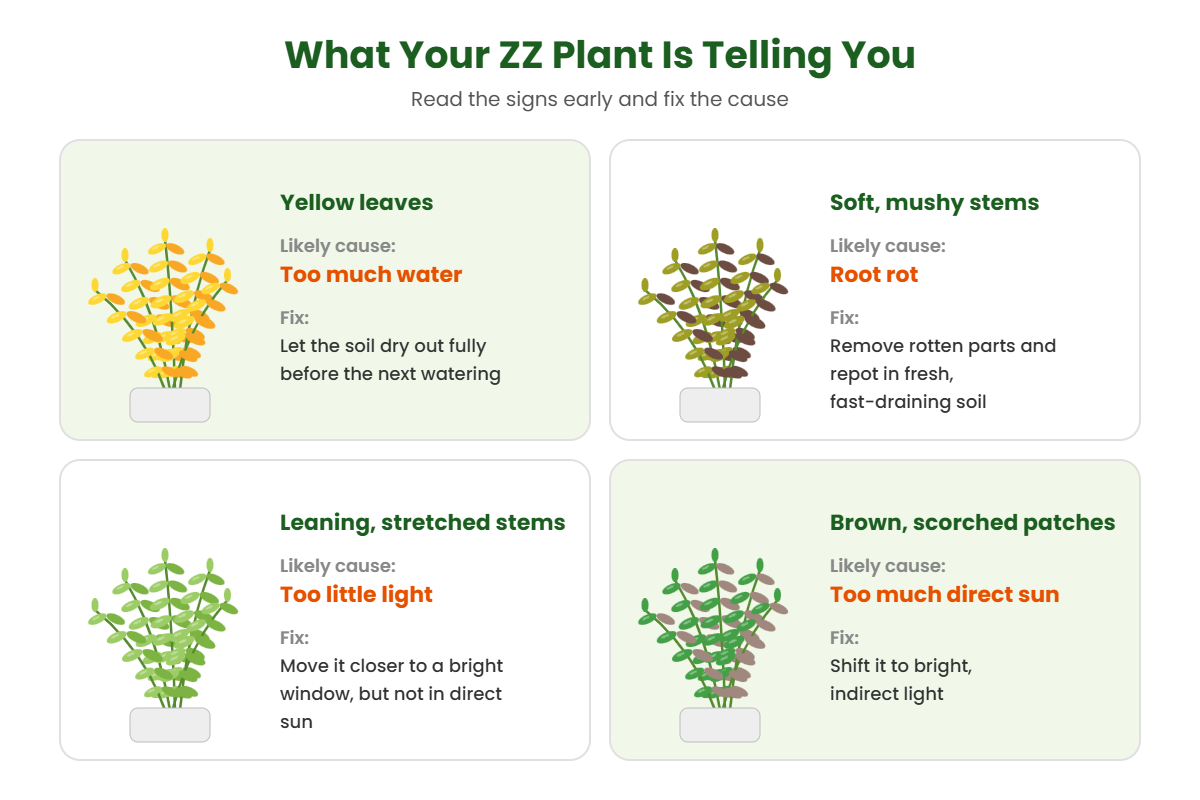
I overwatered it. I treated it like my other plants and watered it regularly. I thought I was taking good care of it. But the soil stayed wet for days, and slowly, the roots began to rot.
I didn’t get the light right. I kept moving it around, and it ended up either in too much shade or in harsh sun. Neither made it happy.
I used the wrong soil. I planted it in heavy soil that held water for a long time and didn’t drain well. That made the overwatering problem even worse.
And my ZZ plant let me know. The leaves started turning yellow. The stems became droopy. And it simply stopped growing. For an “unkillable” plant, it was looking very sad.
What I Learned
Those failures became my best teachers. Here’s what the ZZ plant taught me:
💧 It hates too much water
This was the biggest lesson. A ZZ plant has thick, potato-like roots called rhizomes that store water, like a little water tank underground. So it doesn’t need frequent watering. If you keep the soil wet, those water tanks start to rot.
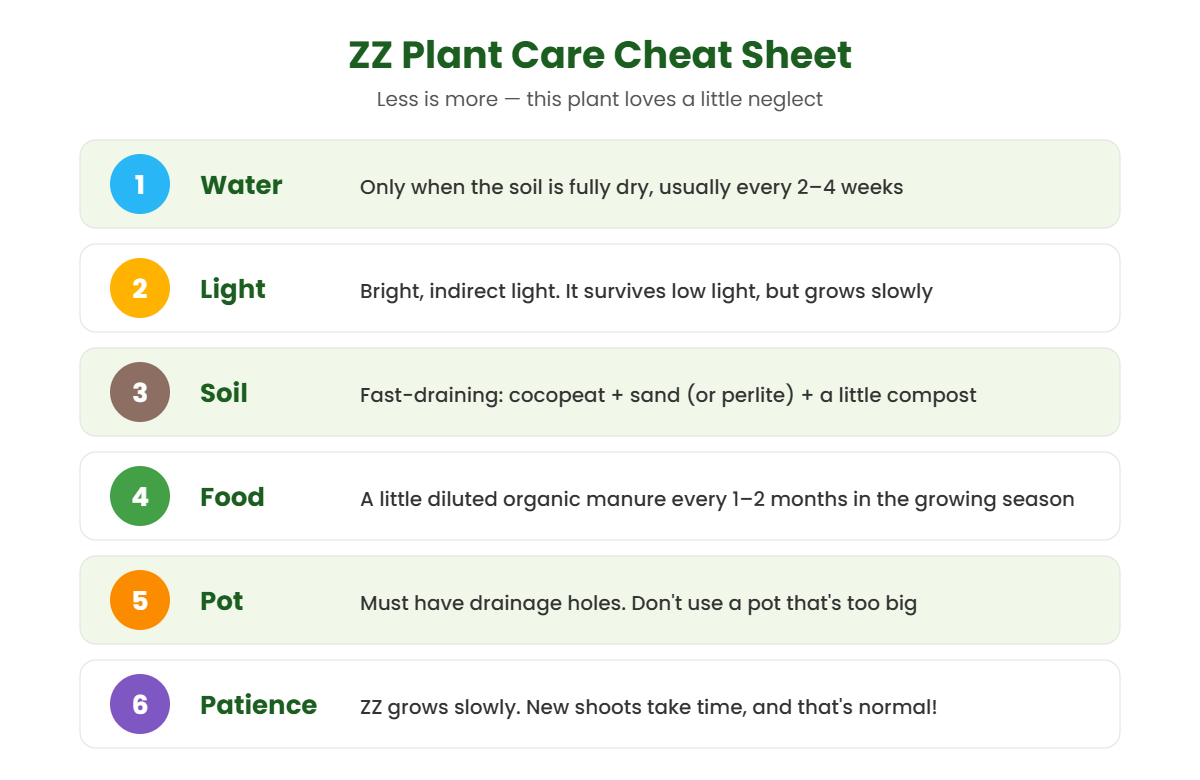
Let the soil dry out completely between waterings. Poke your finger a few inches into the soil. If it feels even a little damp, wait.
☀️ It loves bright, indirect light
A ZZ plant is happiest in bright, indirect light, near a window but not in direct sun. It can survive in low light too, which is why it’s famous as an indoor plant, but it grows much more slowly there.
🪴 It needs soil that drains fast
Heavy soil is a ZZ plant’s enemy. It needs a light, well-draining mix. I now use cocopeat, sand, and a little compost. Water should flow through the pot quickly, not sit inside.
For more on making the right soil mix, read my guide on the right soil mix for your terrace garden.
⏳ It teaches patience
A ZZ plant is slow-growing. Don’t expect new leaves every week. It takes its own sweet time, and that’s completely normal.
The Turning Point: How My ZZ Came Back to Life
Once I understood what my ZZ plant needed, I changed my approach completely.
- I adjusted my watering. No more regular watering. I water only when the soil is completely dry.
- I repotted it into well-draining soil, the cocopeat, sand and compost mix.
- I moved it to the right spot, with bright, indirect light and no harsh sun.
And slowly, my ZZ plant began to recover. New shoots started pushing up from the soil. The leaves became glossy and green again. And when I checked, the roots were healthy and firm.
I still remember seeing that first healthy new stalk rise from the soil. It made me realise that the plant hadn’t needed more care. It had needed the right care.
My Tips for Growing a Happy ZZ Plant
- Keep watering minimal. When in doubt, don’t water. A thirsty ZZ recovers easily, but a drowned one often doesn’t.
- Go easy on fertilizer. Use organic manure sparingly, because too much can burn the roots. A little diluted feed every month or two during the growing season is plenty.
- Use a pot with drainage holes. This is a must.
- Remember: ZZ loves neglect more than over-care! This is the one plant where doing less really is better.
- Perfect for busy people. It’s ideal for office desks, busy homes, and anyone who travels often.
One safety note: ZZ plant leaves and stems are mildly toxic if chewed or swallowed. Keep it out of reach of small children and pets, and wash your hands after trimming or repotting.
Quick Questions
How often should I water a ZZ plant?
Only when the soil is completely dry, usually every 2–4 weeks. In cooler or rainy months, even less.
Why are my ZZ plant’s leaves turning yellow?
Most often, it’s too much water. Let the soil dry out fully, check the roots for rot, and repot in fast-draining soil if needed.
Can a ZZ plant grow in low light?
Yes, it can survive in low light, which makes it a great indoor plant. But it grows best, and fastest, in bright, indirect light.
Less Is More
The ZZ plant taught me that sometimes, less is more.
My failures shaped my success. Today, my ZZ plant is a proud reminder that patience and observation are a gardener’s greatest tools. Watch your plant, understand what it’s telling you, and give it what it truly needs, not just what you think it needs.
Have you ever overloved a plant with too much water? Share your story in the comments! And follow my plant journey on YouTube and Instagram.