
Let me take you back to the day I bought my very first bag of soil.
I went to a local nursery and asked for soil for my garden. The nursery owner handed me a bag, full of praise for it:
“This is super soil, sir. Good for all plants. No need to add anything.”
It sounded perfect. I trusted him, took it home, and filled my pots.
For a few days, everything looked fine. Then, slowly, my plants stopped growing. The leaves turned weak. One by one, they started falling. Every morning I climbed up to the terrace hoping to see a new leaf, and every morning I found more fallen ones instead.
I was watering on time. The plants were getting sunlight. So what was going wrong? Honestly, I was worried.
The problem, I finally understood, was the soil. There is no magic “super soil” that works for every plant. And that’s what this post is about: how to make a simple, good soil mix for your terrace garden, so you never have to go through what I did.
Think of the Pot as Your Plant’s Home
Here’s a simple way to picture it.
A plant growing in the ground is like a person living in a big village. If it needs water or food, its roots can travel far to find it.
A plant in a pot lives in a single small room. It can’t go anywhere. Everything it will ever eat and drink comes from the soil inside that pot. So that soil has to be just right.
Why Plain Garden Soil Struggles in a Pot
Many of us start by filling pots with soil dug from the ground. But in a pot, plain soil causes three problems:
- It turns hard like a brick. Every time you water, it presses down a little more. Soon the roots can’t push through.
- It holds too much water. Roots need air too. In soggy soil, they slowly rot.
- It’s heavy. Wet soil weighs a lot, and on a terrace, all those pots add up.
The answer is a soil mix: ordinary soil, made better by adding two friends.
Meet the Three Friends of a Good Soil Mix
I like to think of a soil mix as a small house for roots:
🏠 Garden soil is the house. It gives the roots something firm to hold on to, and it has minerals plants need. Red soil works well. Just pick out stones and break up big lumps.
🍲 Compost is the kitchen. It’s made from rotted kitchen and garden waste, and it feeds your plants slowly, day after day. Good compost is dark, crumbly, and smells like a forest after rain, never sour.
💧 Cocopeat is the water tank. Made from coconut husk, it soaks up water like a sponge and keeps the mix light and fluffy. One tip: raw cocopeat can be salty, so soak it, squeeze it out, and repeat two or three times before using it. Or buy the “washed” kind.
Curious about growing with cocopeat or even without soil? Read Mediums to Grow Plants at Home.
The Simple Recipe: 1 + 1 + 1
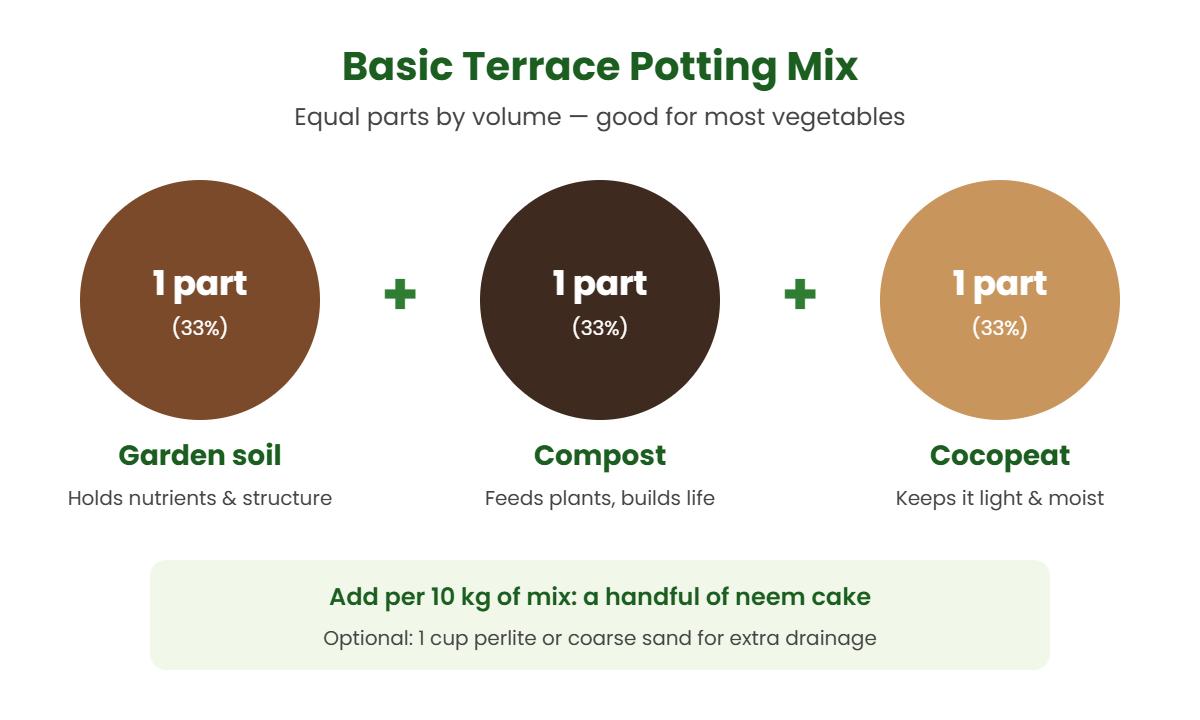
This is the easiest soil mix for a terrace garden, and it works for most vegetables:
- 1 bucket of garden soil
- 1 bucket of compost
- 1 bucket of cocopeat
That’s it! Use the same bucket for all three. Then add a handful of neem cake powder. It feeds the plants slowly and keeps soil insects away.
How to mix: Spread an old sheet on the floor, tip everything onto it, and mix with your hands, just the way you’d mix atta for chapatis. Sprinkle a little water as you go. When it’s ready, it should feel like a squeezed sponge: damp, but not muddy.
Small Changes for Different Plants
Some plants like things a little different. You don’t need to memorise this chart. Just come back to it when you need it.
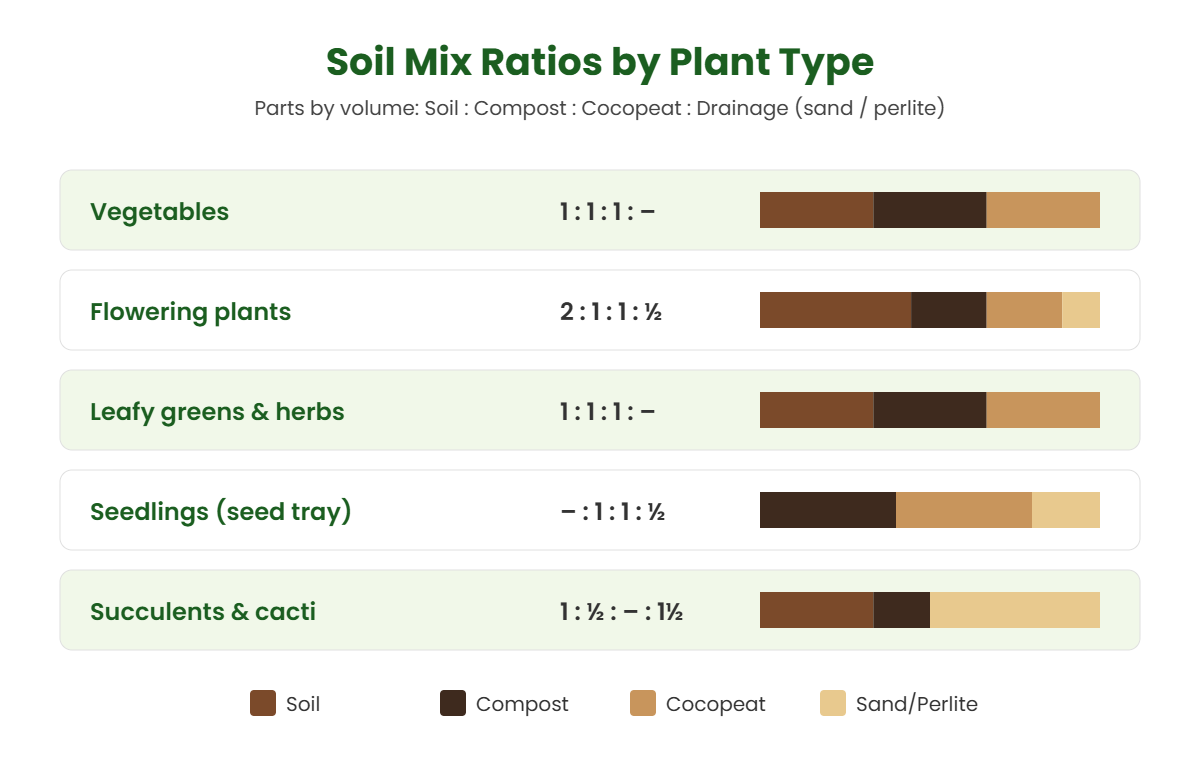
- Vegetables and leafy greens: the basic 1 + 1 + 1 mix is perfect.
- Flowering plants like hibiscus, jasmine and rose: add a little more soil and a little sand, since they stay in the same pot for years.
- Seeds and seedlings: skip the soil. Use just compost and cocopeat, so tiny roots can grow easily.
- Succulents and cacti: add lots of sand. These plants hate wet feet!
A Fun 24-Hour Test to Know Your Soil
Want to know what kind of soil you have before you mix? Try this. It’s free, and kids love it too.
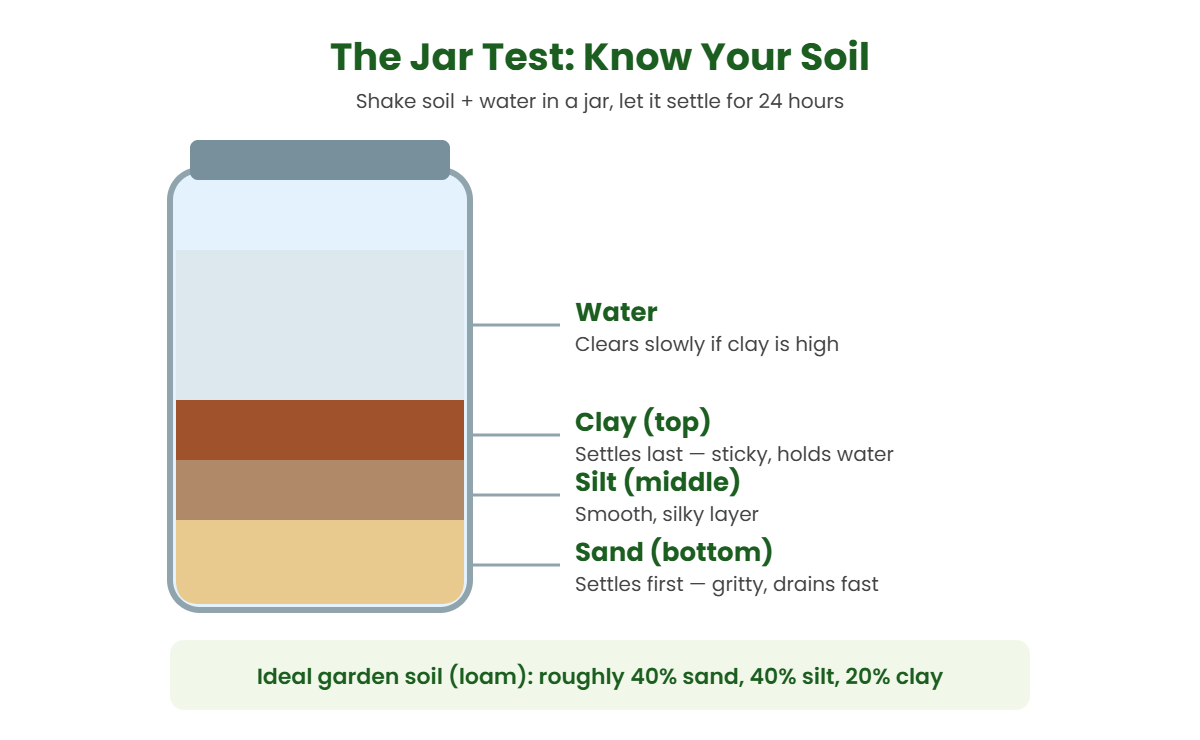
Fill a glass jar one-third with soil, top it up with water, add a pinch of salt, close the lid, and shake hard for two minutes. Then leave it alone until the next day.
Next morning, you’ll see layers: sand at the bottom, silt in the middle, and clay on top. If the clay layer is thick, your soil holds too much water, so add more cocopeat. If it’s mostly sand, it dries too fast, so add more compost.
Listen to Your Plants
Remember my weak, falling leaves? Plants always tell us when the soil isn’t right. Watch for these signs:
- Water sits on top after watering: the soil is too hard or has too much clay.
- Water rushes straight out of the bottom: the soil is too sandy.
- A hard crust forms on top: it needs more compost and cocopeat.
- Plants look small and pale even with good care: the soil has run out of food.
That last one is about plant food. If you’d like to understand it better, read NPK for Plants: Why Nitrogen, Phosphorus and Potassium Are Essential.
Please Don’t Throw Away Old Soil
This is something I learned over the years, from experience and from reading: no garden soil is waste. Used soil still has good structure and life in it. I always reuse the same soil on my terrace.
Here’s my simple routine after every harvest:
- Clean it. Pull out old roots and dry leaves.
- Give it a sunbath. Spread it out in the sun. If the last plant had pests or disease, leave it out for a few days.
- Feed it again. Mix in fresh compost or fertilizer, plus a handful of neem cake.
And your old soil is ready for its next plant. Good for your plants, good for your pocket.
Quick Questions
What is the best soil mix for a terrace garden?
For most plants, equal parts garden soil, compost and cocopeat (1 + 1 + 1) works beautifully. It’s light, holds water well, and feeds plants slowly.
Can I use only cocopeat and compost, without soil?
Yes, especially for leafy greens and seedlings. Just remember it dries faster and needs feeding more often.
Why does my potting soil become hard?
Usually there’s too much garden soil and not enough compost. Loosen the top gently and mix in some compost and cocopeat.
The Lesson From My “Super Soil”
Looking back, that bag of “super soil” taught me the most important gardening lesson of all: there’s no magic soil. There’s just a good mix, a little understanding, and a lot of care.
Start with one bucket of each, watch your plants, and adjust as you learn. Your plants will tell you when you’ve got it right.
In the next post, we’ll use this mix to grow the easiest vegetables you can grow at home.
Have you ever bought a “magic” soil too? Tell me your story in the comments! And come say hello on YouTube and Instagram.