
Here’s a gardening truth that surprises most beginners: more plants die from too much love than from too little.
And by love, I mean water.
I learned this the hard way with my ZZ plant, the so-called “unkillable” houseplant. I watered it regularly, just like my other plants, thinking I was taking good care of it. Instead, the soil stayed wet for days, the roots began to rot, and the leaves turned yellow. (You can read the full story in My ZZ Plant Journey.)
That’s when I understood: watering isn’t about following a fixed schedule. It’s about listening to your plant and your soil.
So let’s learn how to water plants correctly, the simple way.
Why Watering Is Trickier Than It Looks
Picture this. You come home from work, see your plants on the terrace, and think, “Let me give them some water.” It feels like the kind thing to do.
But here’s the secret: roots need two things, water and air.
When soil is too dry, roots get thirsty. When soil is too wet, all the tiny air spaces in the soil fill up with water, and the roots can’t breathe. They slowly suffocate and rot.
Good watering means finding the balance: moist, but never soggy.
The Golden Rule: Check Before You Water
Never water just because it’s “watering day.” Always check the soil first. The easiest way is the finger test:
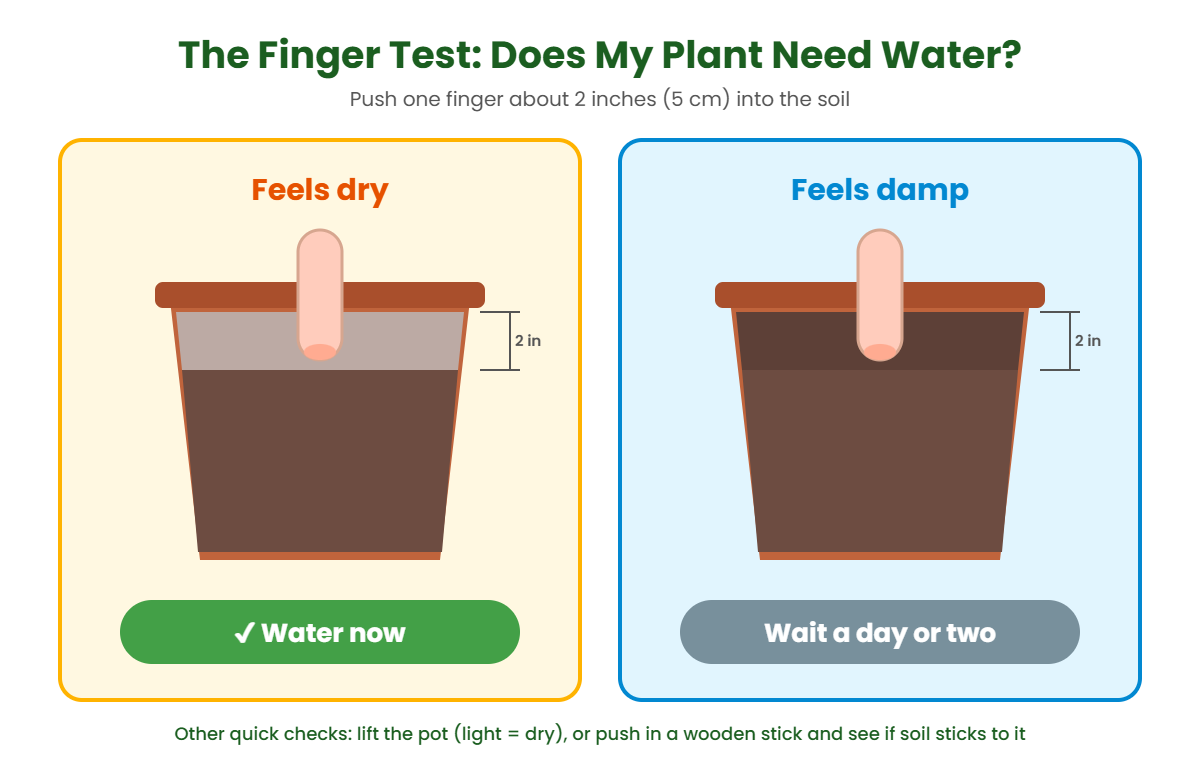
- Push your finger about 2 inches (5 cm) into the soil, roughly up to your second knuckle.
- Feels dry? Water now.
- Feels damp or cool? Wait a day or two, then check again.
That’s it! This one habit will save more plants than anything else in this post.
Two more quick checks:
- Lift the pot. After watering, notice how heavy it feels. A light pot means dry soil.
- Use a wooden stick. Push a chopstick or ice-cream stick into the soil and pull it out. If wet soil sticks to it, there’s still water down there.
How to Water the Right Way
When your plant does need water, here’s how to give it properly:
💧 Water deeply, not a little sprinkle. Pour slowly until water starts flowing out of the drainage holes at the bottom. This makes sure the water reaches the deep roots, not just the top layer.
🌱 Daily watering goes to the soil. For everyday watering, aim at the base of the plant, since that’s where the roots drink. Leaves enjoy water too, as you’ll see in my little ritual below. Just give them their shower in the morning so they dry off before night.
🌅 Water in the morning. Early morning is the best time. The plant gets a full drink before the day’s heat, and any splashes on leaves dry off quickly. In peak summer, a second check in the evening is fine.
🚿 Use a gentle flow. A watering can with a sprinkler head (rose) is perfect. A strong jet from a hose can wash away soil and hurt young roots.
🕳️ Always use pots with drainage holes. Without them, water collects at the bottom, and the roots sit in a puddle. This is the most common cause of root rot.
Is It Too Much Water or Too Little?
Here’s what makes watering confusing: both overwatering and underwatering can make a plant droop. So a drooping plant doesn’t always need more water!
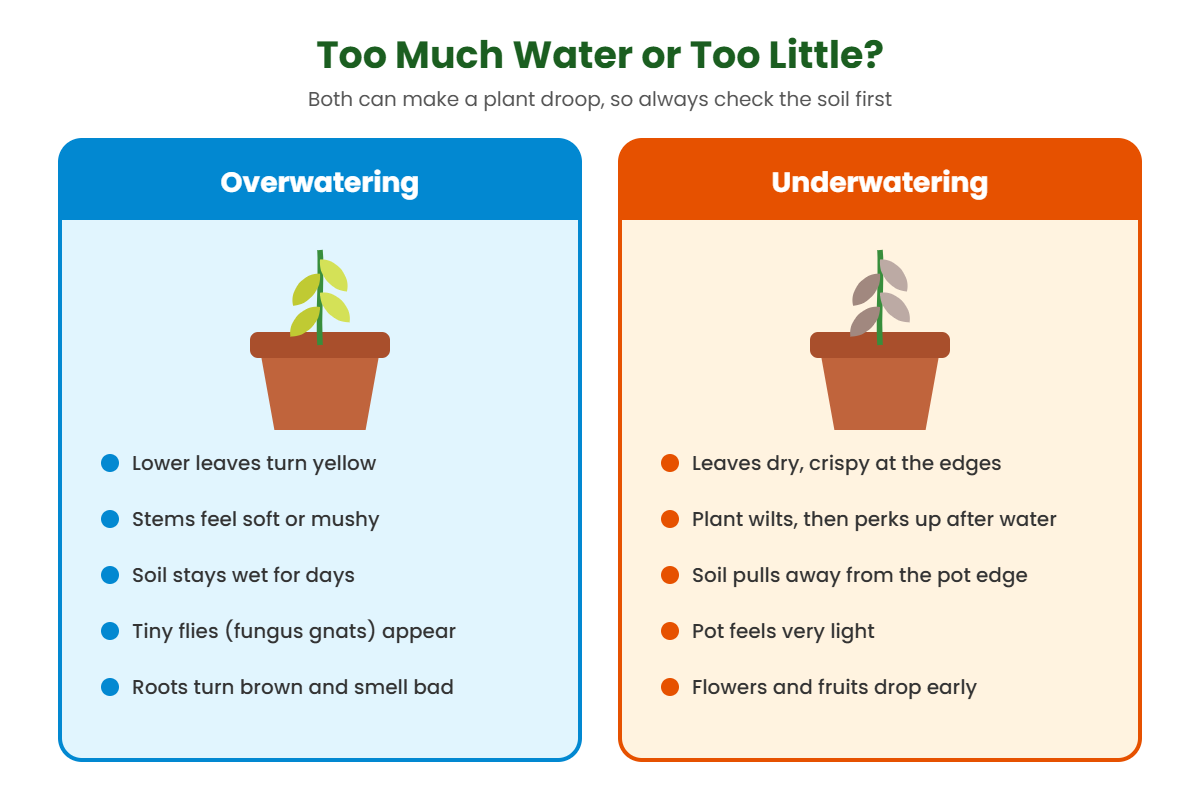
Signs of too much water:
- Lower leaves turn yellow
- Stems feel soft or mushy
- Soil stays wet for days
- Tiny flies (fungus gnats) hover around the pot
- Roots look brown and smell bad
Signs of too little water:
- Leaves turn dry and crispy at the edges
- The plant wilts, then perks up quickly after watering
- Soil shrinks and pulls away from the pot edge
- The pot feels very light
- Flowers and fruits drop early
The trick: When a plant droops, touch the soil first. If it’s wet, stop watering. If it’s dry, give it a good drink.
Not All Plants Are Equally Thirsty
If there’s one thing my years of gardening have taught me, it’s this: watering habits depend on the plant, not just the season. Some of my plants need water every single day, whatever the weather. Others are perfectly happy going days without it. Treating them all the same is where most watering mistakes begin.
- Thirsty plants need the soil to stay evenly moist: leafy greens like methi, palak and coriander, seedlings, and vegetables like tomatoes and beans, especially when flowering and fruiting.
- Moderate drinkers like water once the top layer dries out: most flowering plants such as hibiscus, jasmine and rose.
- Drought lovers prefer to dry out completely between waterings: succulents, cacti, snake plants and, yes, the ZZ plant!
The type of pot matters too. Grow bags and terracotta pots dry out faster because they “breathe.” Plastic pots hold moisture longer. So two of the same plant in different pots may need water on different days.
Watering Through the Seasons
On my own terrace, my watering routine follows the seasons:
- ☀️ Summer: I water daily.
- 🌧️ Monsoon: It depends on the rain. Some weeks the sky does all the work for me.
- ❄️ Winter: Once every 2–3 days.
But remember my learning above: this is just the starting point. A thirsty tomato in a grow bag may still need daily water in winter, while my ZZ plant waits much longer even in summer. Here’s a general guide you can begin with:
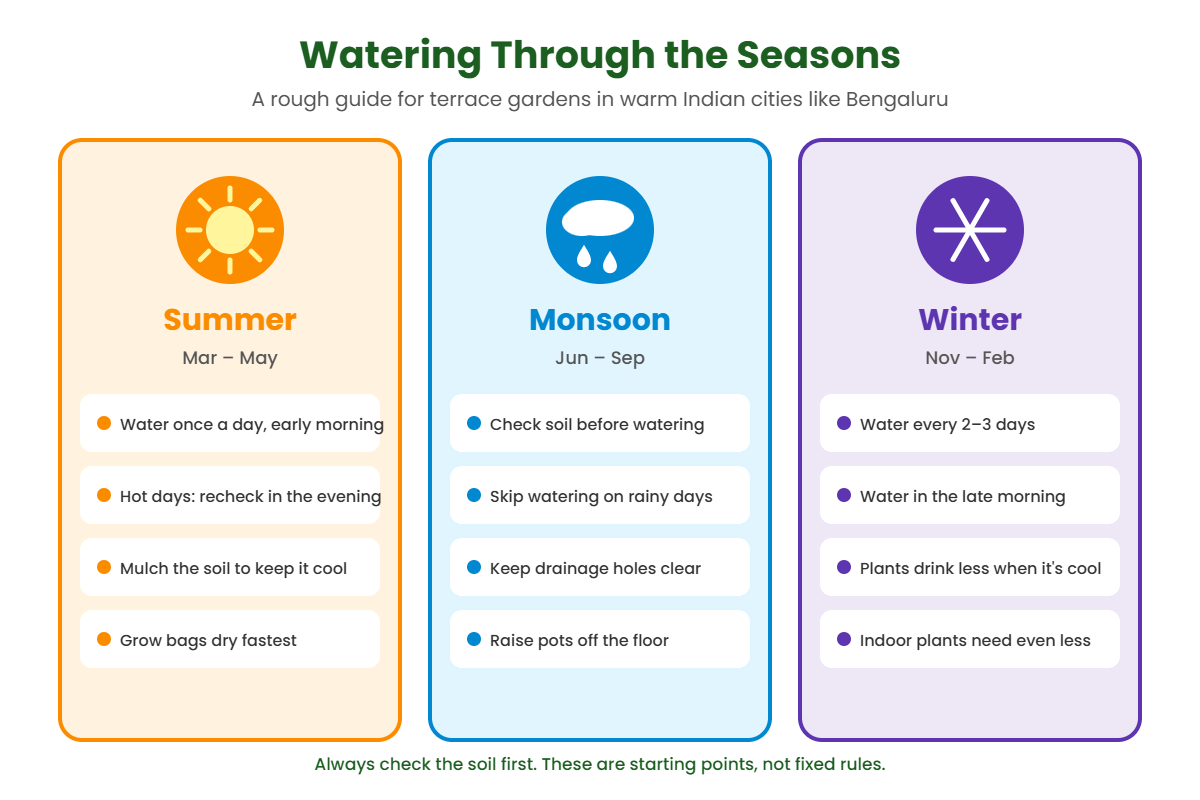
☀️ Summer (March–May): Terraces get very hot, and pots dry out fast. Water every morning, and check again in the evening on very hot days. A layer of mulch (dry leaves or coco husk) on top of the soil keeps it cool and slows drying.
🌧️ Monsoon (June–September): Rain does much of the work, so check the soil before every watering and skip it on rainy days. Make sure drainage holes aren’t blocked, and raise pots slightly off the floor so water doesn’t collect underneath.
❄️ Winter (November–February): Plants grow more slowly and drink less. Water every 2–3 days, in the late morning, and always check first. Indoor plants need even less.
These are starting points, not fixed rules. The finger test always has the final word!
My Little Ritual: A Shower Bath for My Plants 🚿
There’s one more thing I do, and it isn’t in any gardening rulebook. Every now and then, I give my plants a shower bath. I gently spray water over the whole plant, washing the leaves from top to bottom.
To me, it’s a human touch. When I do it, I feel my plants become happy and fresh, just like we feel after a bath on a hot day.
And there are real benefits, too:
- It washes away dust. On a terrace, dust settles on leaves. Clean leaves can soak up more sunlight to make food.
- It cools the plant on hot summer days.
- It discourages tiny pests like spider mites, which love dry, dusty leaves.
A few tips for a good shower bath:
- Do it in the morning, so the leaves dry before evening.
- Use a gentle spray, not a strong jet.
- Skip it for succulents, cacti, and plants with fuzzy leaves. They don’t like wet leaves.
Try it once. You might feel the same joy I do!
Smart Watering Tips
- Mulch your pots. A thin layer of dry leaves or coco husk reduces evaporation, especially in summer.
- Reuse kitchen water. Water used for washing vegetables or rice makes a gentle, free plant drink. Avoid salty, soapy or oily water.
- Going on a trip? Group your pots together in a shaded spot, water well before leaving, and use a simple bottle drip: a plastic bottle with a tiny hole in the cap, turned upside down into the soil.
- Good soil helps. A light, well-draining soil mix holds the right amount of water and lets the rest drain away. Read the right soil mix for your terrace garden.
Quick Questions
How often should I water my plants?
There’s no fixed number. Water when the top 2 inches of soil feel dry. In summer that might be daily, while in the monsoon it might be once a week.
Is it better to water in the morning or evening?
Morning is best. Evening watering is fine in hot weather, but try to keep the leaves dry so fungus doesn’t grow overnight.
How do I save an overwatered plant?
Stop watering and let the soil dry out. If the stems are mushy or the roots smell bad, remove the plant, cut off rotten roots, and repot it in fresh, well-draining soil.
Listen to Your Plants
My ZZ plant taught me that caring for plants doesn’t mean doing more. It means doing what’s right.
So before you pick up the watering can, pause, touch the soil, and look at your plant. It will always tell you what it needs.
In the next post, we’ll turn kitchen waste into gold for your plants: composting at home.
How do you decide when to water your plants? Share your tips in the comments! And see my terrace garden on YouTube and Instagram.