
When I was a little boy, I had one big question that I just couldn’t stop thinking about.
How does a plant grow from a tiny seed?
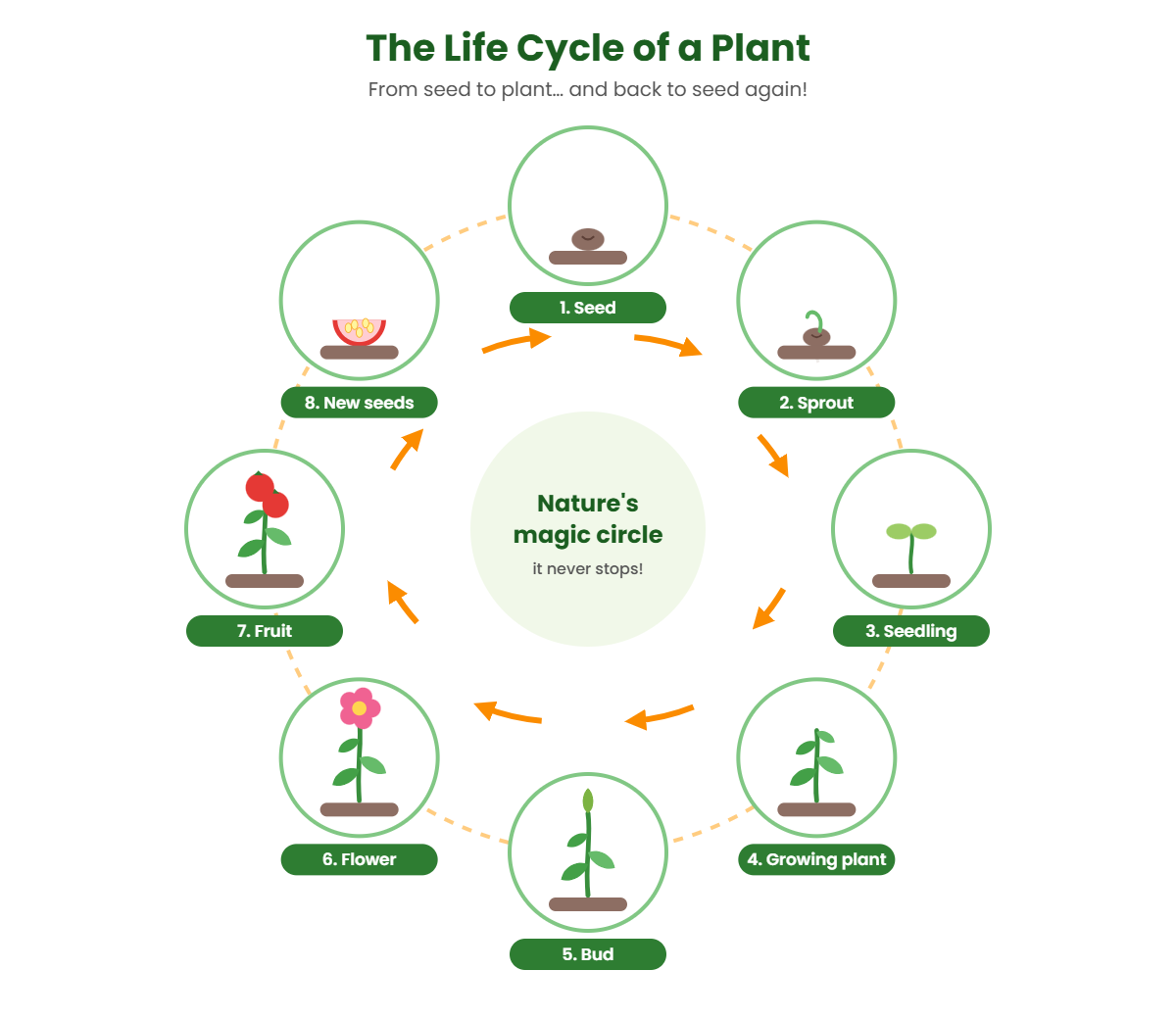
I would look at a seed, so small and so hard, and wonder: how does this become a plant? First, little leaves sprout out. Then the leaves grow big. Then a bud appears. The bud opens into a flower. The flower turns into a fruit. And inside the fruit, there are seeds again!
It felt like magic. Nature filled me with wonder, and that’s exactly where my love for plants began.
Today, I want to share that wonder with you. So come along, and let’s follow a seed on its amazing journey!
Meet Our Little Traveller: A Bean Seed 🫘
Hold a bean seed in your hand. It looks like nothing much, right? Just a small, hard, sleeping thing.
But here’s a secret: inside every seed, there’s a tiny baby plant, fast asleep. And next to it is a little packed lunch, food to keep the baby plant going until it can make its own.
A seed is like a tiny lunchbox with a baby plant inside. All it needs is a wake-up call.
Step 1: Waking Up the Seed 💧
What wakes up a sleeping seed? Three things:
- Water: The seed drinks water and swells up.
- Warmth: Like us, seeds don’t like to wake up in the cold.
- Air: Seeds need to breathe too!
When the seed gets all three, something amazing happens. Its skin splits open, and the baby plant starts to wake up. Scientists have a big word for this: germination (say it: jer-mi-nay-shun).
Step 2: The Sprout 🌱
Guess what comes out first, the root or the shoot?
It’s the root! A tiny white root pokes out and grows downward into the soil. It’s like the plant’s anchor, holding it in place and drinking water.
Then comes the shoot, which grows upward, looking for light. Here’s a fun fact: no matter which way you plant a seed, the root always goes down and the shoot always goes up. Plants always know which way is up!
Step 3: The Seedling 🌿
Soon, the shoot pops out of the soil, and two soft, round leaves open up. These are called seed leaves. They’re the first leaves, and they carry the last of the seed’s packed lunch.
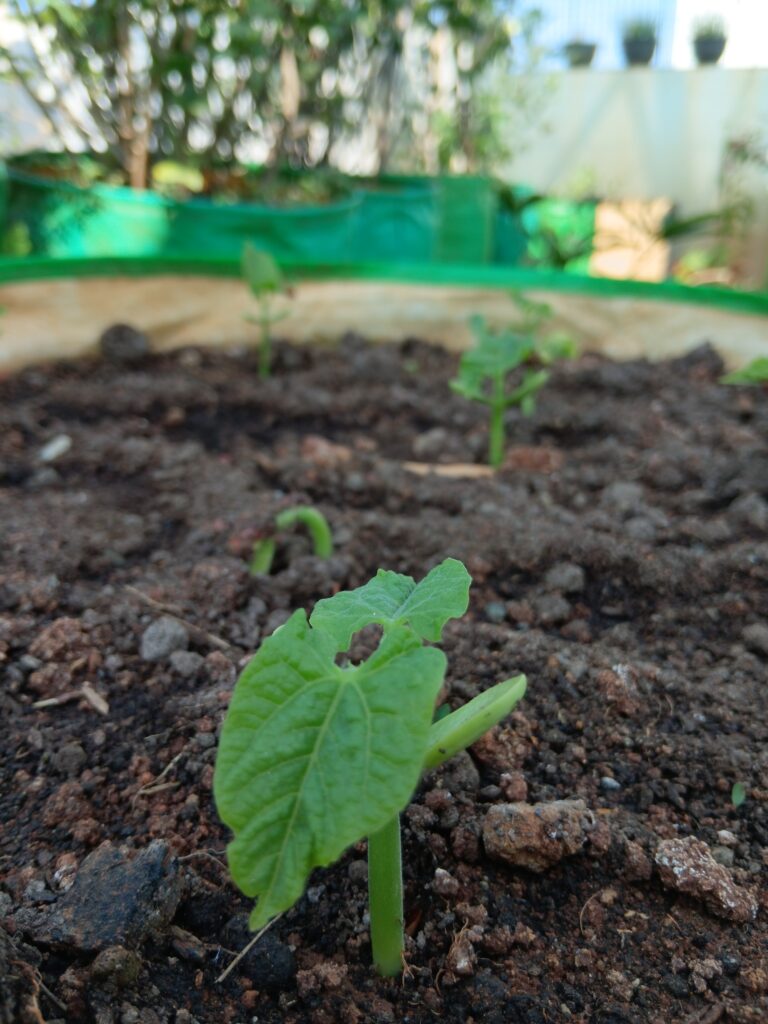
Now the little plant is called a seedling. It’s like a baby taking its first steps!
Step 4: Growing Big and Strong ☀️
After the seed leaves, the plant grows its true leaves. They look different, just like the leaves of the grown-up plant.
Now the plant’s packed lunch is finished. So how does it eat? Plants have a superpower: they make their own food using sunlight! Their leaves catch the sunlight, and with water from the roots and air, they cook up food for themselves.
To grow big and strong, a plant needs:
- ☀️ Sunlight to make food
- 💧 Water to drink
- 🌬️ Air to breathe
- 🟤 Good soil for roots and food
Remember our digging adventure? Most roots live in the topsoil. Read Layers of Soil for Kids to find out why!
Step 5: The Bud 🌷
One day, you’ll spot a small, closed, round shape at the tip of a stem. This is a bud. It’s like a present all wrapped up, waiting to be opened!
Step 6: The Flower 🌸
Slowly, the bud opens into a beautiful flower. But flowers aren’t just pretty. They have a very important job.
Flowers make a yellow dust called pollen. When bees and butterflies visit a flower to drink its sweet nectar, pollen sticks to their bodies. Then they fly to the next flower and carry the pollen with them. This helps the flower make seeds.
So the next time you see a bee on a flower, say thank you. It’s helping plants grow new seeds!
Step 7: The Fruit 🍅
After the flower gets its pollen, its petals fall off, and the part left behind starts to swell and grow. It becomes a fruit!
A tomato, a bean pod, a mango, and a cucumber are all fruits that grew from flowers.
Step 8: Back to Seed! 🔄
Now for the most magical part. Cut open a tomato and look inside. What do you see?
Seeds! Brand new seeds, each one with a tiny baby plant asleep inside, waiting for water, warmth, and air.
And so the journey begins all over again: seed, sprout, leaves, bud, flower, fruit, and seed. It’s nature’s magic circle, and it never stops. This is called the life cycle of a plant.
Activity: Grow a Bean in a Jar! 🫙
Want to watch this magic happen with your own eyes? In a pot, seeds grow hidden under the soil. But in a jar, you can see everything: the root poking out, the shoot rising up, the first leaves opening!
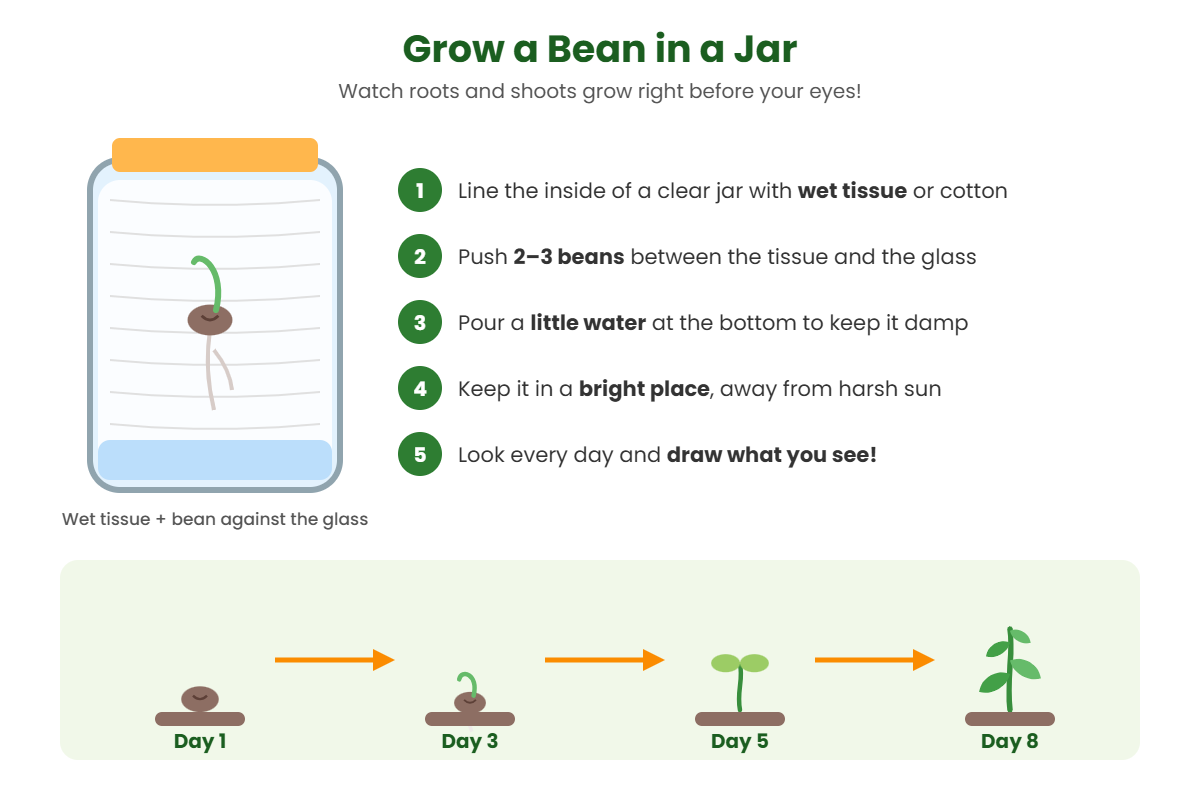
You’ll need: a clear glass jar, some tissue paper or cotton, 2–3 bean seeds (rajma, chana, or any beans from the kitchen), and water.
What to do:
- Line the inside of the jar with wet tissue or cotton.
- Push 2–3 beans between the tissue and the glass, so you can see them from outside.
- Pour a little water at the bottom to keep the tissue damp, not flooded.
- Keep the jar in a bright place, but away from harsh sun.
- Look every day and draw what you see!
What you’ll see: In 2–3 days, a tiny root peeks out. By day 5, a shoot rises and seed leaves open. By day 8, you’ll have a little bean plant! When it has a few leaves, ask a grown-up to help you plant it in a pot of soil, and watch it continue its journey.
Challenge: Turn one bean upside down. Does its root still grow down? Does its shoot still grow up? Find out!
Quick Quiz! 🧠
- What comes out of a seed first, the root or the shoot? (The root!)
- What three things wake up a seed? (Water, warmth and air!)
- Who helps flowers by carrying pollen? (Bees and butterflies!)
- What’s inside a fruit? (New seeds!)
A Note for Parents and Teachers
The bean jar is one of the best first science activities for children, because every change happens where they can see it. Encourage them to keep a simple drawing diary, one picture a day. It builds patience, observation, and a real sense of wonder. Kitchen beans like rajma or chana sprout easily and reliably.
Little Questions, Big Answers
How long does a seed take to sprout?
Most bean seeds sprout in 2–4 days when they’re warm and damp. Some seeds take a week or more.
Do seeds need light to sprout?
Most seeds don’t. They need water, warmth and air to wake up. But once the leaves come out, the plant needs sunlight to make its food.
Is a tomato a fruit or a vegetable?
To a scientist, a tomato is a fruit, because it grows from a flower and has seeds inside! In the kitchen, we usually call it a vegetable.
The Wonder Never Ends
When I was a child, I wondered how a tiny seed could become a whole plant. Now I know the answer, but I still feel that same wonder every time a seed sprouts on my terrace.
I hope you feel it too. So go on, plant a seed, watch it closely, and see nature’s magic circle with your own eyes.
In the next Kids Gardening post, we’ll discover how plants drink water, even though they don’t have a mouth!
Did your bean sprout? Ask a grown-up to share a photo of your bean jar in the comments! Watch fun gardening videos on YouTube and follow along on Instagram.